

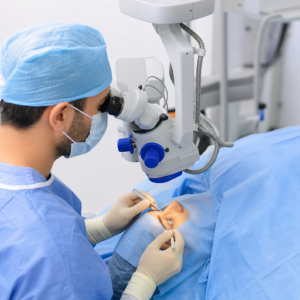
Cataract surgery is one of the most commonly performed surgical procedures in the world, and for good reason — it restores clarity to vision that has been clouded by the natural aging of the eye’s lens. But for millions of patients, cataracts are not the only visual challenge they face. A significant portion of cataract surgery candidates also live with astigmatism, a refractive error caused by an irregularly shaped cornea or lens. When both conditions are present simultaneously, the surgical approach must be carefully planned to address both issues at once, giving patients the best possible visual outcome without the need for additional corrective procedures afterward.
Understanding Astigmatism and Its Role in Vision Problems
Astigmatism occurs when the cornea — the clear front surface of the eye — is shaped more like a football than a perfect sphere. This irregular curvature causes light to focus on multiple points rather than a single point on the retina, resulting in blurred or distorted vision at all distances. Unlike nearsightedness or farsightedness, astigmatism affects both near and far vision simultaneously, making it a particularly disruptive condition for daily life.
Many people are born with some degree of astigmatism and manage it throughout their lives with glasses or contact lenses. However, when cataracts begin to develop, the situation becomes more complex. The clouded lens must be removed and replaced, and if the underlying astigmatism is not corrected at the same time, patients may still require glasses or contacts after surgery — an outcome many hope to avoid.
How Surgeons Address Astigmatism During Cataract Removal
Modern cataract surgery has evolved dramatically over the past two decades. Today, surgeons have multiple tools and techniques at their disposal to correct astigmatism at the same time as cataract removal. The most common approach involves the use of toric intraocular lenses (IOLs) — specially designed artificial lenses that are implanted in place of the clouded natural lens. These lenses are engineered with different powers in different meridians, effectively counteracting the uneven curvature of the cornea and delivering clearer, more balanced vision.
Another technique used in conjunction with or instead of toric IOLs is limbal relaxing incisions (LRIs) or laser arcuate incisions. These are precise cuts made at the edge of the cornea that help reshape its curvature, reducing the degree of astigmatism. When combined with advanced IOL technology, these approaches can dramatically reduce or even eliminate a patient’s dependence on corrective eyewear after surgery.
The Importance of Pre-Surgical Mapping and Measurement
Accurate pre-surgical assessment is the foundation of successful astigmatism correction during cataract surgery. Surgeons use advanced corneal topography and biometry tools to map the exact shape and curvature of the cornea, measure the axial length of the eye, and calculate the ideal IOL power and orientation. Even small errors in measurement can result in residual astigmatism after surgery, so this step is treated with the utmost precision. Patients are encouraged to stop wearing contact lenses for a period before their evaluation, as lenses can temporarily alter corneal shape and skew measurements.
What Patients Should Expect Before and After Surgery
Understanding what to expect throughout the surgical journey helps patients feel more confident and prepared. Before surgery, patients will undergo a comprehensive eye examination that includes corneal mapping, pupil dilation, and a thorough review of their medical history. The surgeon will discuss the degree of astigmatism present and recommend the most appropriate correction strategy based on the individual’s anatomy and lifestyle needs.
After surgery, most patients notice a significant improvement in vision within the first few days, though full stabilization can take several weeks. Those who received toric IOLs may experience a brief adjustment period as the brain adapts to the new lens orientation. Follow-up appointments are essential during this time to monitor healing and ensure the lens has remained properly positioned. In rare cases, a minor enhancement procedure may be recommended to fine-tune the result.
Exploring All Vision Correction Options
For patients who are not yet at the cataract stage but are dealing with astigmatism and other refractive errors, there are several other options worth exploring. Procedures such as LASIK, PRK, and lens replacement surgery offer alternatives depending on the patient’s age, corneal thickness, and overall eye health. According to NHS guidance on laser eye surgery and lens surgery, eligibility for these procedures depends on a range of clinical factors, and a thorough consultation with a qualified ophthalmologist is always the recommended first step.
The Connection Between Whole-Body Health and Eye Surgery Outcomes
It may seem surprising, but overall health and wellness play a meaningful role in surgical recovery and outcomes. Conditions such as dry eye syndrome, diabetes, and even chronic teeth grinding (bruxism) can influence how the body heals after any procedure. Patients dealing with jaw tension or bruxism, for example, may find that addressing this condition before surgery supports a smoother recovery. Clinicians who specialize in comprehensive care often take a holistic view of patient health — for instance, those interested in Botox treatment for bruxism and its clinical outcomes will find that managing systemic tension can have broader benefits for overall well-being, including during recovery from eye procedures.
Expert Guidance from Eye Surgery Today
For patients navigating the complexities of combined cataract and astigmatism correction, access to clear, trustworthy information is invaluable. Eye Surgery Today is a dedicated resource that provides in-depth, medically accurate content to help patients understand their options and make informed decisions. A key area of focus on the platform is astigmatism during cataract surgery, where readers can explore detailed explanations of how surgeons identify and correct astigmatism as part of the cataract removal process, what types of lenses are available, and how to prepare for the best possible surgical outcome.
The platform is designed to bridge the gap between clinical expertise and patient understanding, offering content that is both scientifically grounded and accessible to those without a medical background. Whether you are in the early stages of exploring your options or preparing for an upcoming procedure, Eye Surgery Today serves as a reliable companion throughout the process.
Conclusion: Taking a Comprehensive Approach to Vision Restoration
Cataract surgery no longer means simply removing a clouded lens and accepting whatever residual refractive error remains. Today’s surgical techniques and lens technologies allow ophthalmologists to address astigmatism simultaneously, giving patients the opportunity to achieve genuinely clear, spectacle-free vision for the first time in years — or perhaps ever. The key lies in thorough pre-surgical evaluation, open communication between patient and surgeon, and access to the right information at every stage of the journey.
If you or someone you care for is facing cataract surgery and has been told they also have astigmatism, do not assume that glasses will always be necessary afterward. Speak with a qualified ophthalmologist about the full range of correction options available, and take the time to research and understand what modern eye surgery can achieve. The path to clearer vision is more accessible than ever before.