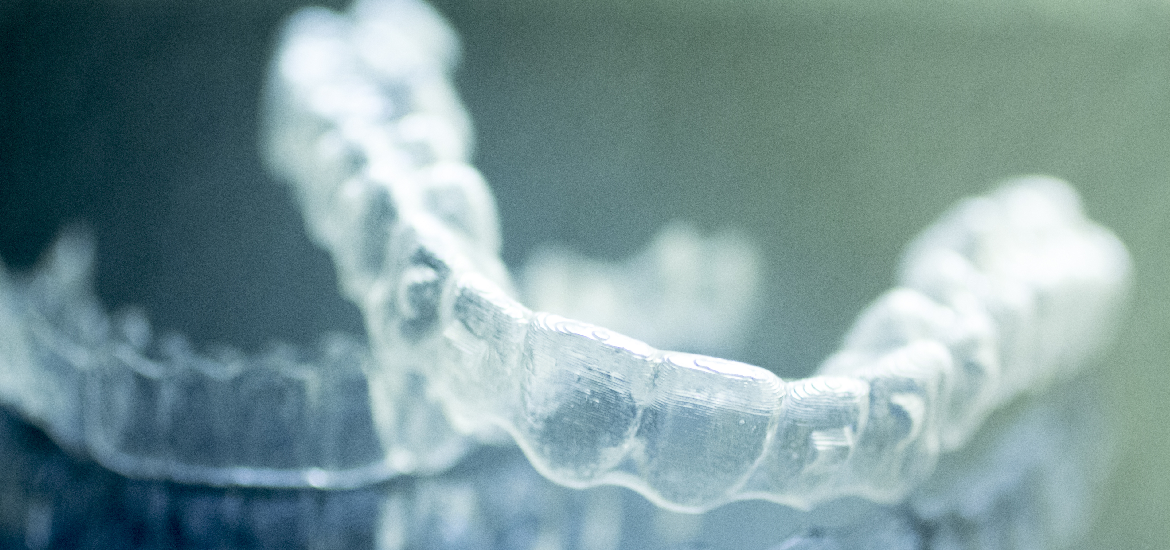
Clear aligners have quietly become the most popular alternative to metal braces for fixing crooked teeth. But how do clear aligners work, and are they actually worth it? More adults are choosing them over traditional braces than ever before, not just for the looks, but because they fit into real life in a way metal brackets never did.
Each tray is custom-made to fit your teeth precisely, applying controlled pressure that shifts them a fraction of a millimeter at a time. This guide breaks down the full process, from your first scan to your final retainer, so you know exactly what to expect before your first consultation.

What Are Clear Aligners?
Clear aligners are removable, nearly invisible trays made from smooth, BPA-free plastic. They are custom-designed to fit your teeth using a 3D digital scan, ensuring a precise fit for your bite and alignment. Each set is part of a personalized series created specifically for your mouth, not a standard or one-size-fits-all appliance.
They are classified as an orthodontic treatment, meaning that they correct tooth position and bite alignment under the supervision of a dentist or orthodontist. Unlike traditional braces, clear aligners use no metal brackets or wires, which makes them a more discreet option for teeth straightening.
How Do Clear Aligners Move Your Teeth?
Clear aligners move teeth by applying controlled, consistent pressure to specific areas. Teeth are supported by a soft tissue called the periodontal ligament, which allows movement within the jawbone. When pressure is applied, the body responds by breaking down bone on one side of the tooth and rebuilding it on the other. This natural biological response allows the tooth to shift gradually into a new position.
Each aligner is designed to target precise tooth movements. The accuracy comes from detailed planning, where every adjustment is calculated in advance using 3D imaging to ensure controlled and predictable alignment.
How Do Clear Aligners Work Step by Step?
Clear aligner treatment moves through a structured sequence, from initial diagnosis to long-term retention.
Step 1: Consultation and Digital Scan
The process begins with a detailed evaluation of your teeth and bite. Your orthodontist takes digital scans and X-rays to assess your alignment. The scan is quick and replaces traditional impressions with a more accurate 3D model.
Step 2: Custom Treatment Planning
Using your scan, a personalized treatment plan is created. This includes a 3D simulation that shows how your teeth will move from start to finish, so you can review the expected outcome before treatment begins.
Step 3: Aligner Fabrication
Your custom aligners are manufactured as a complete series based on the approved plan. This step usually takes a few weeks.
Step 4: Aligner Delivery and Attachments
You receive your first set of aligners. In some cases, small tooth-colored attachments are placed on specific teeth to improve grip and allow more precise movements.
Step 5: Progress Checkups
You visit your orthodontist every 6 to 10 weeks. These appointments are brief and focused on monitoring your progress and providing your next set of trays.
Step 6: Retention Phase
After completing your aligners, a retainer is fitted to maintain your results and prevent your teeth from shifting back.
Do Clear Aligners Really Work for Teeth Straightening?
Yes, clear aligners work effectively when worn as directed. The American Association of Orthodontists confirms that they correct a wide range of alignment issues, particularly in mild to moderate cases. The outcome depends heavily on consistency, since aligners need to be worn for most of the day to maintain steady pressure on the teeth.
For more complex problems, such as severe bite misalignment or skeletal issues, braces or a combination approach often deliver more predictable results. Your orthodontist evaluates your case and recommends the option that offers the best outcome.
What Dental Problems Can Clear Aligners Fix?
Clear aligners are used to correct the following alignment issues:
- Crowded teeth, where teeth overlap due to limited space
- Gaps between teeth
- Overbite, where the upper teeth overlap the lower teeth excessively
- Underbite, where the lower teeth sit in front of the upper teeth
- Crossbite, where the upper and lower teeth do not align properly side to side
- Open bite, where the front teeth do not touch when biting
- Minor relapse after previous orthodontic treatment
Clear aligners deliver consistent results when the case falls within a manageable range and is properly planned.
Are Clear Aligners Better than Braces?
The right option depends on your case and daily routine. Here’s how they compare:
| Factor | Clear Aligners | Braces |
| Appearance | Nearly invisible, discreet | Visible metal brackets and wires |
| Removability | Removable for eating and cleaning | Fixed in place, cannot be removed |
| Food Restrictions | No restrictions, remove before meals | Several restrictions to avoid damage |
| Oral Hygiene | Easy, brush and floss normally | More effort required around brackets |
| Comfort | Smooth plastic, less irritation | Can cause irritation from wires/brackets |
| Compliance Required | High, must wear ~22 hours daily | Low, always working once placed |
| Treatment Complexity | Best for mild to moderate cases | Effective for all cases, including complex |
| Control Over Movement | Limited for complex movements | High control, better for precise corrections |
| Lifestyle Fit | Flexible, fits daily routine easily | Less flexible due to fixed nature |
Note: Clear aligners suit mild to moderate cases and offer flexibility in daily life. Braces provide stronger control and remain the preferred option for complex alignment or bite corrections. If you’re weighing both options, our orthodontics page covers what each treatment involves in more detail.
Do Clear Aligners Work for Adults and Older Patients?
More adults are choosing clear aligners now than at any point before. Many avoided orthodontic treatment earlier in life and are correcting alignment issues in their 30s, 40s, or later. Teeth continue to respond to pressure regardless of age, although movement may take slightly longer in older patients.
There’s also a practical benefit worth noting. The National Institute of Dental and Craniofacial Research links poor tooth alignment to a higher risk of gum disease and decay. Straighter teeth are easier to clean, and for many adults, this decision goes beyond appearance. It’s about long-term oral health.
Takeaway
Clear aligner treatment leads to a more aligned, balanced smile through a series of precisely planned movements. Each tray shifts your teeth closer to the intended position, with the entire process mapped in advance for predictable results.
For many patients, this approach offers an effective way to straighten teeth without the visibility of braces. The final outcome depends on accurate planning and consistent wear, both of which play a key role in achieving stable, long-term results.
Start Your Clear Aligner Treatment with a Consultation
If you’re considering clear aligners, the first step is a professional evaluation. At Innovative Dental and Orthodontics, you’ll receive a digital scan and review a personalized treatment plan before making any decision.
Call (407) 542-4580 or visit 1884 County Road 419 #1010, Oviedo, FL 32765 to schedule your consultation and take the first step toward a straighter smile.
FAQs
How long do clear aligners take to straighten teeth?
Treatment time depends on case complexity. Mild cases take 6 to 12 months, moderate cases 12 to 18 months, and complex cases up to 24 months. Consistent wear is the key factor in staying on schedule.
What makes clear aligners work effectively?
Clear aligners work best when worn for about 22 hours daily. Removing them only for eating and cleaning maintains steady pressure. Inconsistent wear delays progress and affects fit, while switching trays at night helps improve comfort and consistency.
Are clear aligners covered by dental insurance?
Many dental plans with orthodontic benefits cover clear aligners similar to braces. Coverage varies by plan. At Innovative Dental and Orthodontics, your insurance is reviewed in advance, and financing options are available to help manage treatment costs.
Do clear aligners hurt?
Most patients feel mild pressure when switching to a new tray. This usually lasts for 24 to 48 hours and is less intense than adjustments with braces.